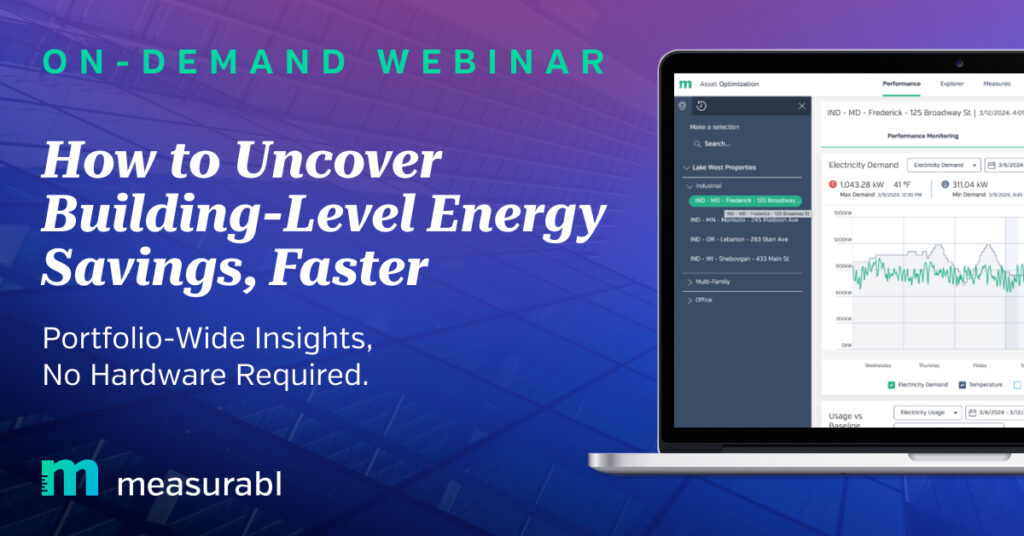
Watch the 5-Minute Optimize Overview
Want a quick walkthrough before diving in? Watch this short overview to see how Measurabl Optimize helps real estate teams use utility interval data to identify energy waste, uncover savings opportunities, and improve building performance faster without installing on-site hardware.
Energy costs are rising across commercial real estate, and so is the pressure to operate buildings more efficiently.
For owners, operators, and asset managers, this is no longer just a sustainability challenge. It is a financial performance issue. Energy waste can quietly erode NOI, increase operating expenses, and make it harder to meet both business and decarbonization goals.
The challenge is that many teams still do not have the visibility they need to find that waste quickly.
Monthly utility bills can show how much energy a building used, but they rarely show when that energy was consumed, what changed, or where inefficiencies may be occurring. By the time the bill arrives, the opportunity to correct avoidable waste may have already passed.
That is where interval data can change the way real estate teams manage building performance.
Introducing a Faster Path to Building Energy Optimization
Measurabl Optimize has always helped real estate teams identify and act on energy waste by using interval data—detailed energy usage captured at 5-15 minute intervals—to reveal patterns, inefficiencies, and opportunities for improvement.
Now, there’s a faster way to get started.
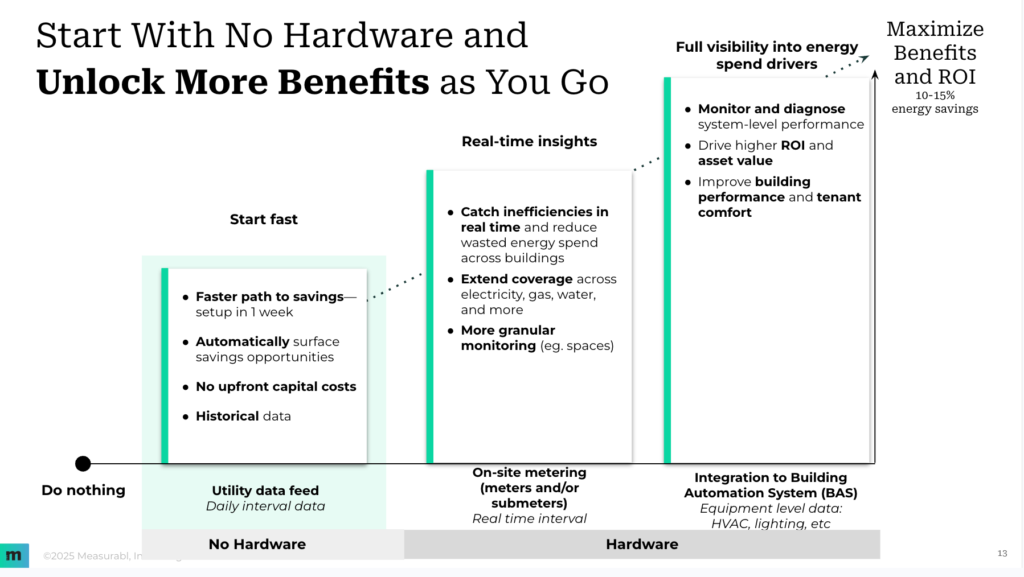
With direct access to utility interval data, teams can begin using Optimize without installing on-site hardware. Buildings can be brought online in as little as one week, with access to historical usage data from day one.
This means teams can start identifying savings opportunities immediately, without the upfront cost or deployment timelines that have traditionally slowed adoption.
Why Interval Data Matters
Traditional utility bills tell you how much energy a building uses.
They don’t tell you:
- when that energy was consumed
- where inefficiencies are occurring
- or which systems are driving avoidable costs
Optimize uses interval data to provide a much clearer picture of building performance.
With this level of visibility, teams can:
- spot after-hours usage and unnecessary runtime
- detect abnormal patterns and energy spikes
- identify systems operating outside expected schedules
- prioritize actions that reduce energy spend and improve performance
In short, it turns energy data into operational insight.
Start Fast. Go Deeper Where It Matters.
Optimize is designed to meet teams where they are and scale as their needs evolve.
There are multiple ways to access the interval data that powers the software.
Teams can begin with data delivered directly from utility providers—no hardware required—allowing them to get buildings live quickly and access near real-time data (15 min intervals, updated daily), and historical performance from day one.
For deeper visibility, teams can layer in on-site hardware, including meters and system integrations HVAC and lightning equipment, for example. This enables real-time insights, deeper granularity, and a clearer understanding of how building systems are driving energy use.
Each level of data unlocks more control, more precision, and greater ROI.
From Insight to Impact
Customers using Optimize have achieved sustained energy savings of 10% or more translating into millions of dollars in avoided operating costs.
At the building level, even small improvements can have a meaningful financial impact.
Consider a 500,000 sq ft office building with $3M in annual energy spend. By aligning HVAC schedules with occupancy, reducing peak demand, and targeting high-impact systems, operators were able to reduce energy costs by 10–15%, delivering $300K–$450K in annual savings.
Those savings don’t just improve operating performance, they also translate directly into asset value.
Why This Matters Now
Energy costs are projected to continue rising, driven by increased demand, infrastructure constraints, and market volatility.
At the same time, owners and operators are under increasing pressure to improve NOI, reduce emissions, and operate more efficiently.
The ability to identify and eliminate waste earlier, and across more buildings, is becoming a critical advantage.
A More Accessible Path to Performance
This new no-hardware approach removes one of the biggest barriers to building optimization: time to value.
Instead of waiting months to deploy hardware and begin analysis, teams can now:
- get started quickly
- scale across more of their portfolio
- and prioritize where deeper investment will have the greatest impact
What Comes Next
A practical starting point is understanding whether your buildings can access interval data directly from their utility providers. Where it’s available, Optimize can offer a faster path to identifying inefficiencies and potential savings.
We covered this in more detail in our recent webinar. Watch the replay and read the recap to learn how different interval data acquisition paths work, where hardware may or may not be needed, and how real estate teams are using this data to improve building performance.
Watch the webinar replay →