
 Energy benchmarking and ordinance filing have changed in fundamental ways.
What began as a relatively simple annual reporting requirement has evolved into a multi-jurisdiction compliance function with real financial, operational, and reputational consequences. Across North America, cities and states are expanding mandatory benchmarking programs, adding emissions disclosure requirements, and introducing building performance standards that all depend on the same underlying data.
For real estate leaders managing portfolios, compliance season is no longer just about meeting deadlines. It now requires consistent data quality, scalable processes, and a clear understanding of where exposure exists and how quickly it’s changing.
This shift explains why filing season feels harder every year and why small breakdowns in benchmarking now create outsized downstream risk.
Why Ordinance Filing Feels Harder Every Year
The growing complexity of ordinance filing isn’t accidental and it isn’t temporary.
Cities and states increasingly rely on building-level energy data to guide climate policy. As a result, reporting programs have shifted from passive disclosure exercises into active compliance systems that influence how buildings are evaluated, financed, and operated.
In practice, benchmarking data is no longer collected in isolation. It now feeds directly into emissions calculations, public disclosure reports, and performance requirements.
For real estate teams, this has transformed compliance from a seasonal task into an ongoing operational responsibility. Filing success now depends less on knowing individual deadlines and more on having systems that can absorb change.
4 Ways Energy Benchmarking has Changed Across North America
Energy benchmarking has evolved from a basic reporting requirement into a core operational function for real estate teams.
Across North America, changes to benchmarking programs are reshaping not only what needs to be reported, but also how much coordination, resourcing, and process rigor it takes to stay compliant. Understanding these shifts is critical for assessing the time, tools, and team capacity required to manage compliance without disruption.
Below are four ways energy benchmarking and ordinance filing have changed and why they now demand more intentional planning:
- Deadlines Are Clustering, Not Spreading Out
Most benchmarking and ordinance programs now follow similar reporting cycles, with deadlines concentrated in the spring and early summer.
For multi-jurisdiction portfolios, this means managing multiple submissions within the same narrow window, each with different formats, validation rules, and approval processes. When issues arise, there’s little room to correct them before penalties begin to accrue.
The result is a filing season that’s increasingly compressed, where small delays quickly cascade into missed deadlines across markets.
- Coverage Is Expanding to Include More Buildings
As programs mature, jurisdictions continue lowering size thresholds and expanding which asset types are covered.
Buildings that previously sat outside reporting requirements are increasingly pulled into scope, sometimes with little advance notice. Portfolios that once managed compliance for a subset of assets now find themselves responsible for filing across far more properties, often without additional internal resources.
This expansion is one of the most common reasons teams discover compliance exposure late in the process.
- Validation Standards Are Getting Stricter
Submitting a report is not always enough. Cities and states are paying closer attention to the quality and consistency of reported data.
Estimated consumption, missing meters, and unexplained anomalies are more likely to trigger review, correction requests, or enforcement action. Validation systems increasingly cross-check submissions against historical performance and utility records, reducing tolerance for gaps that once passed unnoticed.
As a result, data issues that surface during filing season often can’t be resolved quickly enough to avoid penalties.
- Compliance Outcomes Are More Visible
Beyond financial penalties, many programs now include public disclosure components that make compliance outcomes visible to tenants, lenders, and investors.
Energy grades, disclosure listings, and non-compliance notices have shifted ordinance filing from a back-office function to a front-facing business risk. Errors and delays can affect leasing conversations, financing discussions, and broader ESG evaluations.
Why These Changes Matter Together
Individually, each of these shifts can be manageable. Together, they create a compliance environment where traditional, manual approaches struggle to keep up.
More buildings, tighter timelines, stricter validation, and greater visibility mean filing success now depends on preparation and process maturity, not just effort during deadline weeks.
For teams navigating these changes, the hardest part is often knowing where to focus first and determining whether the right expertise and resources are in place to manage compliance at scale.
 To help teams assess where compliance risk is most likely to surface, Measurabl created an Ordinance Filing Readiness Checklist that highlights common exposure, data, and process gaps before deadlines hit.
👉 Download the Ordinance Filing Readiness Checklist
Common Energy Benchmarking and Filing Risks That Compound Quickly
Most ordinance filing failures don’t happen because teams ignore deadlines. They happen because small, unresolved issues stack up across portfolios and surface when there’s no time left to fix them, often leaving teams under-resourced for the complexity involved.
Across markets and asset types, the same risks appear again and again.
- Unclear Ordinance Exposure Across the Portfolio
Many teams don’t have a single, reliable view of which buildings are subject to which ordinances and why.
Coverage thresholds vary by jurisdiction and often change over time. Buildings that were previously out of scope can quietly become subject to reporting, especially as size thresholds drop or asset classifications shift. Mixed-use properties add another layer of complexity, as square footage calculations and use definitions differ across cities.
Acquisitions introduce additional risk, as newly added buildings often enter portfolios mid-year without immediate visibility into benchmarking and reporting requirements. When ordinance exposure isn’t assessed at acquisition, teams frequently discover compliance obligations only as deadlines approach.
When exposure isn’t clearly mapped in advance, teams often discover obligations late in the filing cycle.
How teams address this: Measurabl’s free solution gives teams a centralized view of energy and emissions ordinance exposure across their portfolio.
- Data Quality Issues Discovered Too Late
Energy benchmarking depends on a complete, defensible 12-month dataset. When data is collected manually across utilities, meters, or spreadsheets, gaps and errors are far more likely to occur.
Missing meters, estimated consumption, and billing discrepancies often go unnoticed until deadlines approach, when there is rarely enough time to resolve them. Without automated data collection and normalization, teams rely on manual checks that struggle to catch issues early.
Utility corrections and historical data gaps can take weeks or months to fix. In many cases, issues discovered during filing season cannot be corrected until the next reporting cycle, triggering penalties or enforcement actions that carry forward.
- Manual Processes That Don’t Scale
Spreadsheets and ad-hoc workflows often work for small portfolios or single jurisdictions. They break down quickly as reporting volume increases.
Multi-jurisdiction filing requires managing different formats, validation rules, and submission portals simultaneously. Under deadline pressure, manual processes lack the version control and audit trails needed to prevent errors.
- Knowledge Concentrated With Individuals
In many organizations, ordinance filing works because one person knows how to make it work.
When compliance knowledge lives in inboxes or personal spreadsheets, teams are exposed to risk during turnover, vacations, or competing priorities. This concentration of knowledge is one of the most common hidden risks in compliance programs.
Assess Your Filing Readiness Before Deadlines Stack Up
These risks are difficult to spot when filing season feels distant. They become obvious when deadlines overlap and there’s no margin for error.
The checklist above helps real estate teams evaluate:
- Which buildings are subject to which ordinances
- Whether benchmarking data is complete and defensible
- Where manual processes introduce risk
- How enforcement and penalties apply across jurisdictions
Building Scalable Compliance Capabilities
The teams that navigate compliance season most effectively don’t work harder during filing windows. They build capabilities that reduce pressure every year. That shift starts with treating ordinance filing as an operational function, not a seasonal project.
Systematically Understand Portfolio Exposure
Scalable compliance begins with a centralized view of ordinance exposure across the portfolio, including current coverage and how thresholds are expected to expand.
Validate Data Year-Round
Successful teams validate energy and water data throughout the year so issues can be resolved before filing pressure begins. Year-round validation turns filing season into execution, not triage.
Document Processes So Knowledge Scales
Documented processes allow organizations to maintain continuity, reduce repeat errors, and scale filing volume without proportional increases in workload.
Know When Internal Capacity Is Reaching Its Limits
Even well-run teams eventually reach a point where internal resources can’t keep up, not just because of volume, but because the submission process itself has become significantly more complex. Recognizing this early allows teams to evaluate support options before compliance becomes reactive.
Watch our Webinar on Energy Benchmarking Complexities across North America
2026 Compliance Season: Managing Risk in a Multi-Jurisdiction World
In this 30-minute session, Mike Zatz and Brendon Donoghue share what’s changing in 2026, where portfolios face the greatest exposure, and how leading teams are reducing compliance risk with scalable, year-round processes.
How Measurabl Supports Ordinance Filing Across North America
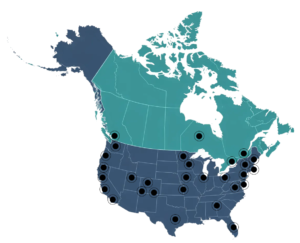
As compliance expectations expand, our goal is to help teams stay compliant without draining internal resources. Measurabl supports end-to-end energy benchmarking ordinance compliance for 40+ major energy and emissions programs across North America. We work as an extension of your team to:
✓ Identify ordinance exposure across city, state, and regional programs
✓ Understand upcoming deadlines and compliance risk
✓ Prepare and validate energy and water data to meet local requirements
✓ Submit filings accurately and on time, on your behalf
✓ Track compliance status so nothing slips through the cracks
If you or your team need support with energy benchmarking this filing season, reach out to us here.
Energy Benchmarking and Ordinance Filing FAQs
What is energy benchmarking?
Energy benchmarking is the process of tracking a building’s energy and water use over time and comparing performance across similar buildings using standardized metrics.
Why do cities require energy benchmarking?
Cities use benchmarking data to establish performance baselines, calculate emissions, inform policy decisions, and support compliance enforcement.
Do all buildings need to comply with benchmarking ordinances?
No. Coverage varies by jurisdiction, building size, and asset type, but requirements are expanding across North America.
How are benchmarking errors enforced?
Enforcement mechanisms vary, but may include financial penalties, public disclosure of non-compliance, or additional reporting and validation requirements.
What benchmarking programs does Measurabl support?
Measurabl can support all ordinance and benchmarking programs across North America. Check out a sample list here.